
Why the Same Motorcycle Can Look Different Around the World
The global motorcycle industry is highly diverse.
A motorcycle manufacturer may develop a model for several countries, but that does not necessarily mean every market receives exactly the same version.
Differences in regulations, consumer preferences, road conditions, engine requirements, and local competition can influence how motorcycles are designed and marketed.
This is one reason motorcycle enthusiasts sometimes discover that a familiar model has a different name or specification in another country.
Local Regulations Influence Motorcycle Design
One of the biggest factors affecting motorcycle specifications is regulation.
Different countries can have different requirements related to:
- Emissions
- Lighting
- Safety equipment
- Noise
- Vehicle Certfitication
- Engine Standards

Manufacturers need to ensure that motorcycles comply with the requirements of each market where they are sold.
As a result, components and specifications may change between countries.
Consumer Preferences Also Matter
Market preferences can be just as important as regulations.
Motorcycle buyers in different countries may prioritize different characteristics.
Some markets may have strong demand for:
- Fuel efficiency
- Practical storage
- Affordable maintenance
- Larger engine capacity
- Sport-oriented styling
- Adventure capability

Manufacturers can therefore adjust product positioning depending on local demand.
Different Names for Related Models
One interesting example of international motorcycle marketing is model naming.
A motorcycle may be known under one name in one country and a different name in another.
This can happen because manufacturers use different branding strategies, existing model names, or local marketing considerations.
For motorcycle enthusiasts, this can sometimes make it difficult to identify whether two motorcycles are actually related models.
The name alone may not tell the complete story.
Local Road Conditions Can Influence Specifications
Road environments also vary considerably between countries.
Manufacturers may consider factors such as:
- Road Quality
- Traffic Conditions
- Average Travel Distance
- Climate
- Terain
- Urban Density

These conditions can influence how motorcycles are positioned and which features receive greater attention.
A motorcycle designed primarily for dense urban traffic may have different priorities from one marketed toward long-distance riding.
Global Platforms and Local Adaptation
Modern motorcycle manufacturers increasingly use global development platforms.
A manufacturer can develop a common technical foundation and then adapt certain elements for individual markets.
This approach can help manufacturers manage development and production while still responding to local requirements.
Adaptation may involve:
- Engine tuning
- Electronics
- Bodywork
- Suspension
- Lighting
- Instrumentation
- Accessories
- Model Naming
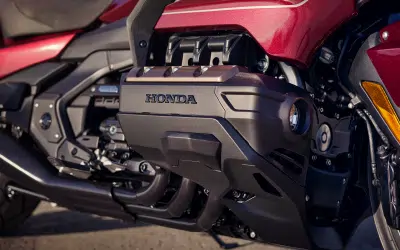
The result can be motorcycles that share a common family identity while having meaningful differences between markets.
Why This Matters for Motorcycle Parts
Market-specific motorcycle specifications are especially important for motorcycle parts businesses.
A distributor importing parts for one market should not automatically assume that every component from a similar model will be compatible.
Part numbers, model codes, production years, and market applications can all matter.
This is why accurate catalog information is important for international motorcycle trade.
Indonesia's Role in the Global Motorcycle Industry
Indonesia is one of the important motorcycle production and supply markets in Asia.
Its manufacturing ecosystem supports not only domestic motorcycle demand but also international trade in motorcycles and components.
For international buyers, understanding the Indonesian motorcycle industry can therefore provide useful insight into sourcing motorcycles and genuine motorcycle parts for different markets.
Final Thoughts
Motorcycle manufacturers do not always build one identical version of a model for the entire world.
Regulations, customer preferences, road conditions, production strategies, and local competition can all influence motorcycle specifications and model positioning.
For motorcycle enthusiasts, these differences make the global motorcycle market particularly interesting.
For parts distributors and international buyers, they highlight the importance of checking exact model applications, specifications, and part numbers before purchasing.
Understanding these market differences can make international motorcycle sourcing more accurate and efficient.